Professional Bio Examples and Fill-In Templates (2026)
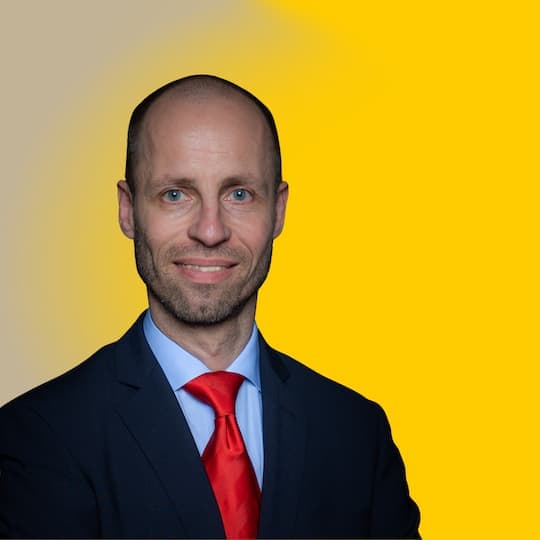
 Marcel Cruz
A professional bio is a short summary of who you are, what you do, and why it matters. Length is decided by where it goes: about 50 words for a byline, 100 for a speaker page or LinkedIn, 200 for a company site. Below are fill-in templates at each length, then eleven examples you can copy.
What makes a professional bio work?
Every bio that works has the same three-part spine, in this order: who you are (role plus who you serve), proof (one specific, checkable result), and what's next (a link, an invitation, or where to find you). Everything else is decoration. If a sentence does not do one of those three jobs, cut it.
Fill-in templates: 50, 100 and 200 words
Copy the scaffold, replace the bracketed slots, delete what does not apply. Each one is shown filled in underneath so you can see the shape.
The 50-word bio (bylines, directories, conference programmes)
[Name] is a [role] at [company], where [he/she/they] [what you do, for whom]. [He/She/They] previously [one credential or prior role]. [Name]'s [work/writing/research] on [topic] has [one specific proof point]. [He/She/They] [is based in / writes at] [place or link].
Filled in:
Dana Okafor is a product designer at Verrall, where she builds onboarding flows for fintech teams. She previously led design at two seed-stage startups. Her work on form abandonment has been taught in three university UX courses. She writes about interface friction at danaokafor.com.
The 100-word bio (LinkedIn, speaker pages, portfolio about sections)
Take the 50-word version and add one paragraph: how you got here, and one more proof point.
[Name] is a [role] at [company], where [he/she/they] [what you do, for whom]. [He/She/They] has spent [number] years working in [field], first at [context], then [context].
[Name] is best known for [the thing you are actually known for], which [concrete outcome with a number]. [He/She/They] [speaks/writes/advises] on [topic] and [current side project or focus]. [He/She/They] lives in [city] and can be reached at [link].
Filled in:
Dana Okafor is a product designer at Verrall, where she builds onboarding flows for fintech teams. She has spent nine years in interface design, first in agency work for retail clients, then in-house at two seed-stage startups.
She is best known for the abandonment audit method, a two-hour teardown that cut signup drop-off by 34% across the eleven products that have run it. She writes a monthly newsletter on interface friction and is working on a short book about forms. She lives in Lisbon and can be reached at danaokafor.com.
The 200-word bio (company team pages, press kits, book jackets)
Add a third paragraph: the arc, a second proof point, and one human detail. This is the longest a professional bio should ever be.
[Name] is a [role] at [company]. [He/She/They] [what you do, for whom, and why it matters in one sentence].
[He/She/They] began in [starting point], and moved into [field] after [the turning point]. Over [number] years [he/she/they] has [achievement one with a number] and [achievement two with a number]. [His/Her/Their] approach is [the one thing that makes your method different from everyone else's].
[Name] [speaks/writes/teaches] on [topic], and [his/her/their] work has appeared in [where]. [He/She/They] serves on [board or committee, if any]. Outside work, [he/she/they] [one genuine human detail]. [He/She/They] lives in [city]. [Link].
The rule that keeps the 200-word version from turning into a resume: every claim in paragraph two needs a number attached to it, and paragraph three gets exactly one non-work sentence, not three.
What should I put in my Instagram bio?
An Instagram bio has 150 characters, so it works differently from a LinkedIn or executive bio: one line on what you do and who for, one line of proof or personality, then a call to action pointing at your link. Write it in the first person, not the third. Instagram search matches against your name and username fields, so put your keyword there rather than burning bio characters on it.
A working structure, in order:
- What you do, for whom. "Nutrition coach for shift workers" beats "wellness enthusiast."
- One proof point or one human detail. A number, a credential, or something genuinely specific. Not three adjectives.
- A call to action plus the link. Tell people what is behind the link before they tap it.
Instagram counts emoji and line breaks against the 150, so draft it in a character counter before you paste it in, and if you want the styled lettering people use for the first line, a font generator produces Unicode variants Instagram accepts. The social media bio below is the format to copy; the others are built for longer surfaces. For lines you can lift directly, see our Instagram bio ideas.
Executive bio examples: board style and operating style
Executive bios split into two kinds, and using the wrong one is the most common mistake at this level. A board-style bio is written for people evaluating your judgment: governance, scope, sector. An operating-style bio is written for people evaluating your results: numbers, timeframe, what you actually changed.
Board style, for annual reports, board listings, and governance pages:
Priya Raghunathan serves on the board of Halden Industries, where she chairs the audit committee. She spent eighteen years in industrial manufacturing, including six as chief financial officer of Corran Group, a listed business with operations in eleven countries. She has led two acquisitions and one carve-out, and sits on the finance committee of a national arts charity. She qualified as a chartered accountant in 2001.
Operating style, for company team pages, investor updates, and conference introductions:
Marcus Feld is chief operating officer at Tessellate, where he runs a 240-person delivery organisation across four sites. He joined in 2021 when the company was missing half its delivery dates, and rebuilt scheduling around a single capacity model; on-time delivery moved from 51% to 93% in seven quarters. Before Tessellate he ran European operations for a logistics group. He is known for refusing to add headcount before fixing the process it would paper over.
What separates both from a weak executive bio: neither opens with "seasoned leader" or "results-driven executive." They open with a role and a scope, and every claim has a number or a named scale attached. Write yours in the third person, keep it to 100 words for operating contexts and 120 for board listings, and cut any adjective that could apply to a stranger.
Nine more professional bio examples by format
The social media bio
For LinkedIn headlines, X, and any profile with a hard character limit. First person, one proof point, one instruction.
Nutrition coach for shift workers. 400+ night-shift nurses coached off the 3am vending machine. Free meal-prep guide below.
Why it works: it names an unusual audience, so the right person recognises themselves instantly, and the proof point is a number nobody else can claim.
The academic bio
For faculty pages, grant applications, and conference programmes. Credentials first, research focus second, current work third.
Dr. Elena Vasquez is Associate Professor of Cognitive Science at Ardsley University, where she directs the Memory and Decision Lab. Her research examines how sleep loss changes risk assessment in clinical settings, funded by two national grants since 2019. She is the author of fourteen peer-reviewed papers and teaches the graduate seminar in experimental design.
Why it works: it leads with appointment and institution, which is what the reader is checking, then narrows to one sentence of research focus rather than listing every interest.
The entrepreneur bio
For investor materials, press, and founder profiles. The origin problem, the scale now, the direction.
Tomas Lindqvist founded Rill after spending four years as a tour manager watching independent venues lose money on ticketing fees. Rill now handles ticketing for 900 small venues across the Nordics and has returned an estimated 4.1 million euros in fees to them. He is building toward venue-owned ticketing as the default in Europe.
Why it works: the origin story is one clause, not a paragraph, and it explains the company rather than flattering the founder.
The creative professional bio
For portfolio sites, gallery pages, and commission enquiries. Medium, point of view, where the work has been.
Ines Marchetti is an illustrator working in gouache and ink, mostly on editorial commissions about food and memory. Her work has appeared in three national magazines and on the covers of six novels. She draws slowly, from photographs she takes herself, and takes four commissions a year.
Why it works: "she draws slowly, from photographs she takes herself" is a working method, not an adjective. It tells an art director what hiring her is like.
The speaker bio
For event programmes and session listings. Written so an organiser can paste it without editing, and an attendee can decide whether to attend.
Dr. James Patterson has spent twelve years studying how organisations decide to shut down failing projects, and why they almost never do it on time. He advises three government agencies on programme review and has run the exercise with more than 200 teams. His talks are practical, uncomfortable, and end with a checklist people actually use.
Why it works: it tells the audience what the session will feel like, which is the thing every other speaker bio leaves out.
The technical professional bio
For engineering profiles and technical hiring. Systems and scale, not a tools list.
Amara Chen is a staff site reliability engineer at Nordwell, where she owns the incident response platform serving 3,000 engineers. She led the migration that cut mean time to recovery from 47 minutes to 9. She maintains two open-source tracing libraries and writes the internal postmortem guide that four other companies have since adopted.
Why it works: it describes systems owned and outcomes moved. A list of technologies dates within a year; "cut recovery from 47 minutes to 9" does not.
The healthcare professional bio
For practice pages and directory listings. Credentials, specialty, care philosophy, in that order, because patients scan for the first two.
Dr. Amelia Reyes is a board-certified cardiologist with fifteen years of interventional experience. She focuses on preventative care and builds personalised heart health plans with her patients rather than for them. She sees patients at two clinics and teaches the cardiology rotation for third-year residents.
Why it works: "with her patients rather than for them" is a real position on how care should work, which is the only part of a healthcare bio that differs between practitioners.
The sales professional bio
For LinkedIn and client-facing profiles. Track record with numbers, territory, and the kind of buyer you are good with.
Kofi Mensah sells enterprise infrastructure software to regulated industries, mostly banking and insurance. He has closed 34 contracts above half a million dollars and has never lost a renewal in six years. He is at his most useful in long procurement cycles where the technical buyer and the budget holder disagree.
Why it works: the last sentence describes a situation, so the right prospect knows within one line whether he is the person to call.
The consultant bio
For proposals and practice pages. The problem you solve, the method, the evidence it works.
Rachel Osei helps mid-sized manufacturers fix quality problems that inspection cannot catch. Her method is a two-week floor study that traces defects back to scheduling decisions rather than operator error. She has run it at 28 plants; the median result is a 40% reduction in rework within two quarters.
Why it works: it names a method and puts a median result on it. Most consultant bios claim outcomes without saying what was done.
Which bio length and tense goes where?
| Where it goes | Length | Tense | Lead with |
|---|---|---|---|
| Instagram or X profile | Under 150 characters | First person | What you do, for whom |
| LinkedIn about section | 100 words | First or third | Role plus one proof point |
| Byline or directory listing | 50 words | Third person | Role and company |
| Speaker or event programme | 100 words | Third person | Expertise and what the talk delivers |
| Company team page | 150 to 200 words | Third person | Role and scope |
| Board or governance listing | 120 words | Third person | Appointment and sector experience |
| Press kit or book jacket | 200 words | Third person | The one thing you are known for |
| Link-in-bio page | 50 to 80 words | First person | What you do plus what to tap |
First person or third person?
Third person for anything an organisation publishes about you: bylines, speaker programmes, team pages, board listings, press kits. First person for anything you publish about yourself in a social context: Instagram, X, your own about page, a link-in-bio page.
The test is who the reader thinks is speaking. On a conference programme, the event is introducing you, so "Dana Okafor is a product designer" is correct. On your own profile, you are speaking, so "I design onboarding flows for fintech teams" is correct. Switching tense mid-bio is the single most common error, and it reads as copy-paste.
What is a 5 line bio?
A five-line bio gives one line each to: who you are and your role, your main area of expertise, one standout achievement, a human detail, and a call to action. It suits directory listings, speaker introductions, and about sections with tight space.
Line 1: Dana Okafor, product designer at Verrall. Line 2: I work on onboarding and signup flows for fintech teams. Line 3: My abandonment audit has cut signup drop-off by 34% across eleven products. Line 4: I collect out-of-print design manuals and cannot stop. Line 5: Newsletter and portfolio at danaokafor.com.
How do I make my bio look professional?
The five mistakes that make a bio look amateur, in order of how often they appear:
- Opening with an adjective. "Passionate", "seasoned", "results-driven", "dynamic". These describe nobody. Open with a role.
- Claims without numbers. "Increased sales" is a sentence anyone can write. "Grew renewal revenue 45% in two years" is not.
- Listing every role you have ever had. A bio is not a resume. Two prior contexts at most.
- Mixed tense. First person in one paragraph, third in the next.
- No next step. The bio ends and the reader has nothing to do. Give them a link, and say what is behind it. Our call to action examples cover the phrasing.
Proofread it out loud. Anything you would not say to a person is written wrong.
Where does your bio actually go?
Most people write one bio and paste it in three places, which is why one of the three always reads badly. The three surfaces have different jobs:
- LinkedIn is read by people checking whether to take a meeting. Lead with proof.
- A speaker page or team page is read by people who have already decided you are relevant. Lead with scope.
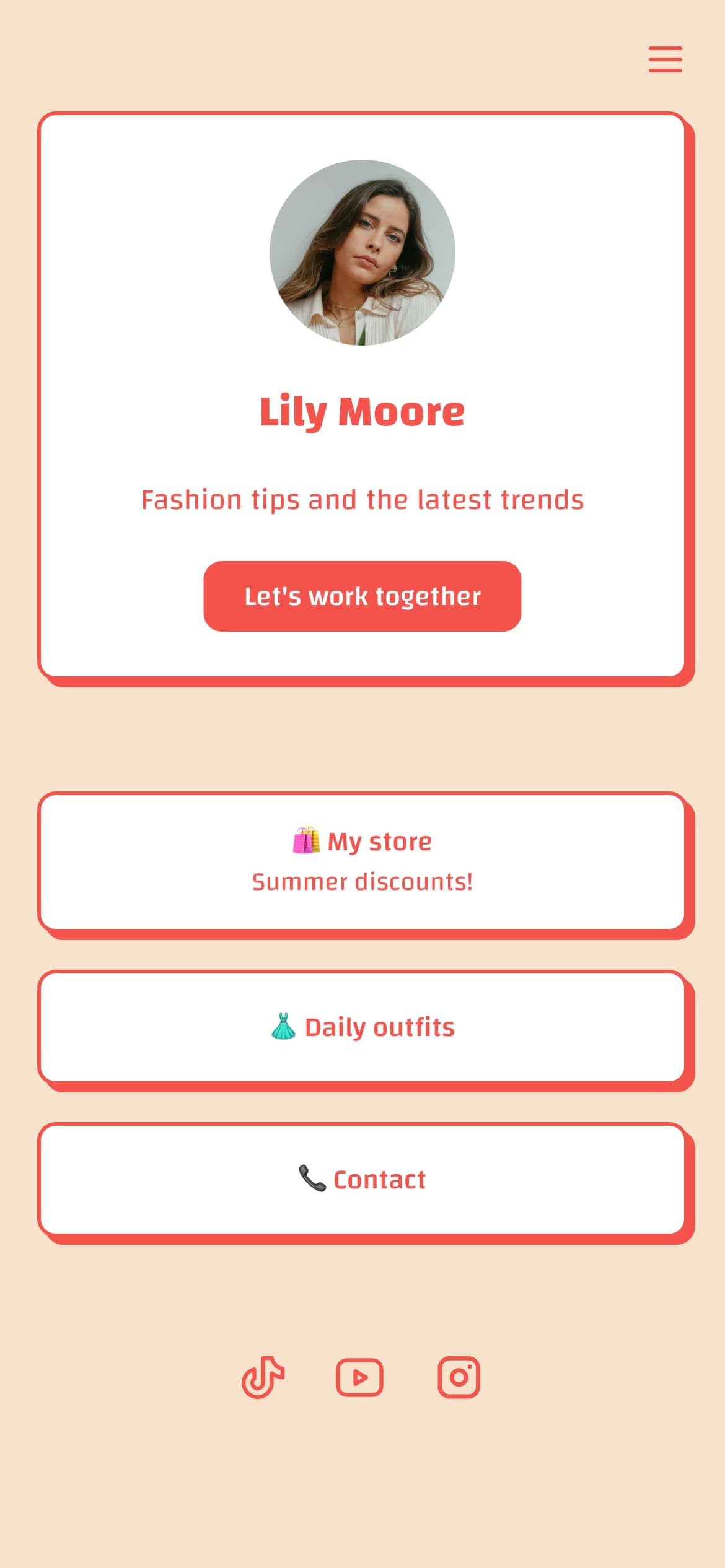
- A link-in-bio page is read by people who just tapped through from a social profile and have about four seconds. It is also the only one of the three where the bio has a clickable link directly beneath it, so the bio's last line should point at whatever that link is.
That last one is where the 50-word template earns its keep: short enough to read before the thumb moves, specific enough to explain what the buttons underneath are for. A strong social profile and a clear personal brand do the rest.
Frequently Asked Questions
How do I write a short bio about myself?
Start with your name and current role, add one or two achievements with concrete numbers, then close with a personal detail or a next step. Write in the third person for professional contexts, keep it to three or four sentences, and lead with what makes you credible rather than a full career history. The 50-word template above is the fastest route.
What is a good bio for a profile?
A good profile bio states who you help and how, backs it with a specific result, and ends with a clear next step such as a link or an invitation to connect. Match the length to the platform: one line for a social bio, a short paragraph for LinkedIn or a portfolio page.
What is a good executive bio?
One that opens with a role and a scope rather than an adjective, attaches a number or a named scale to every claim, and picks a lane: governance and sector experience for board listings, results and timeframes for operating contexts. Keep it to 100 to 120 words in the third person.
What is the best short bio?
The best short bio is the 50-word version: role, who you serve, one proof point with a number, and where to find you. It is short enough for a byline or a directory listing and long enough to be specific, and it is the version you should write first because every longer bio is built on top of it.
How many words should a professional bio be?
Fifty words for a byline or directory listing, 100 for LinkedIn or a speaker page, 200 for a company team page or press kit, and never more than 200. Write the 200-word version first, then cut it down to the other two, because trimming a long bio produces a better short one than padding a short one.
How many characters is an Instagram bio?
150 characters, and emoji and line breaks both count toward it. The name field above the bio is separate and Instagram search matches against it, which makes it the better place for a keyword than the bio text itself.
Write yours in the next ten minutes
Pick the length that matches where the bio has to go, copy the matching template above, and fill the slots with the most specific numbers you have. Then read it out loud once and cut every adjective that survived.
If the bio is going on a link-in-bio page, write the 50-word version and make the last line point at the button underneath it. Linkero gives you the page, the bio field, and the links in one place, so the bio and the thing it is pointing at never drift apart.